Featured
Table of Contents
Reuse needs attribution under CC BY 4.0. Need More Details on Market Gamers and Competitors? Download PDF January 2026: Salesforce consented to obtain Own Business for USD 1.9 billion to boost multi-cloud backup and compliance abilities. December 2025: Microsoft launched Copilot for Characteristics 365 Financing, reporting 40% quicker month-end close cycles among early adopters.
1. INTRODUCTION1.1 Study Assumptions and Market Definition1.2 Scope of the Study2. RESEARCH STUDY METHODOLOGY3. EXECUTIVE SUMMARY4. MARKET LANDSCAPE4.1 Market Overview4.2 Market Drivers4.2.1 AI-Powered Workflow Automation Adoption4.2.2 Shift to Subscription, SaaS Earnings Models4.2.3 Demand for Unified Data Fabrics4.2.4 Low-Code, No-Code Platforms in Person Development4.2.5 Emerging Vertical-Specific Copilots4.2.6 Algorithmic ESG Cost Optimizers4.3 Market Restraints4.3.1 Escalating Cloud Invest Optimisation Pressure4.3.2 Growing Open-Source Alternatives4.3.3 Data-Sovereignty and Cross-Border Compliance Hurdles4.3.4 Shortage of Prompt-Engineering Talent4.4 Market Value Chain Analysis4.5 Regulatory Landscape4.6 Technological Outlook4.7 Porter's Five Forces Analysis4.7.1 Bargaining Power of Suppliers4.7.2 Bargaining Power of Buyers4.7.3 Hazard of New Entrants4.7.4 Risk of Substitutes4.7.5 Strength of Competitive Rivalry4.8 Effect of Macroeconomic Aspects on the Market5.
COMPETITIVE LANDSCAPE6.1 Market Concentration6.2 Strategic Moves6.3 Market Share Analysis6.4 Company Profiles (consists of Global Level Introduction, Market Level Summary, Core Segments, Financials as Available, Strategic Information, Market Rank/Share for Secret Companies, Products and Solutions, and Current Advancements)6.4.1 Microsoft Corporation6.4.2 IBM Corporation6.4.3 Oracle Corporation6.4.4 SAP SE6.4.5 Snowflake Inc. 6.4.6 Salesforce Inc. 6.4.7 Adobe Inc.
6.4.9 Sage Group plc6.4.10 Workday Inc. 6.4.11 ServiceNow Inc. 6.4.12 Epicor Software Corporation6.4.13 Infor6.4.14 Oracle NetSuite6.4.15 monday.com6.4.16 Deltek Inc. 6.4.17 Zoho Corporation6.4.18 Atlassian Corporation6.4.19 Freshworks Inc. 6.4.20 HubSpot Inc. 6.4.21 Odoo S.A. 7. MARKET OPPORTUNITIES AND FUTURE OUTLOOK7.1 White-Space and Unmet-Need Assessment You Can Purchase Parts Of This Report. Examine Out Costs For Specific SectionsGet Cost Split Now Service software is software application that is utilized for company functions.
Improving B2B Funnel Efficiency by Predictive AutomationBusiness Software Market Report is Segmented by Software Application Type (ERP, CRM, Business Intelligence and Analytics, Supply Chain Management, Personnel Management, Finance and Accounting, Job and Portfolio Management, Other Software Types), Implementation (Cloud, On-Premise), End-User Market (BFSI, Healthcare and Life Sciences, Government and Public Sector, Retail and E-Commerce, Transportation and Logistics, Manufacturing, Telecommunications and Media, Other End-User Industries), Organization Size (Large Enterprises, Small and Medium Enterprises), and Geography (The United States And Canada, South America, Europe, Asia Pacific, Middle East, Africa).
Is the Enterprise Prepared for 2026 Growth?
Low-code platforms lead development with a projected 12.01% CAGR as organizations broaden citizen advancement. Interoperability mandates and AI-driven medical workflows press health care software application spending up at a 13.18% CAGR.North America retains 36.92% share thanks to dense cloud infrastructure and a fully grown consumer base. The top five companies hold approximately 35% of profits, signifying moderate fragmentation that prefers niche professionals in addition to platform giants.
Software application invest will accelerate to a stunning 15.2% in 2026 per Gartner. A massive number with record growth the biggest development rate in the whole IT market.
CIOs are bracing for the impact, setting 9% of the IT spending plan aside for cost increases on existing services. Nine percent of every IT budget in 2025-2026 is being assigned just to pay more for the very same software business currently have. While budgets for CIOs are increasing, a substantial portion will merely balance out rate increases within their frequent spending, implying nominal costs versus real IT investing will be manipulated, with rate hikes soaking up some or all of budget plan growth.
Refining Your Workflows via Automation
Out of that spectacular 15.2% development in software application costs, approximately 9% is simply inflation. That leaves about 6% for actual brand-new spending.
Next year, we're going to spend more on software application with Gen AI in it than software without it, and that's simply four years after it became available. This is the fastest adoption curve in business software application history. In 2024, enterprises tried to build their own AI.
They worked with ML engineers. They try out customized designs. The majority of it failed. Expectations for GenAI's capabilities are decreasing due to high failure rates in initial proof-of-concept work and dissatisfaction with existing GenAI results. Now they're done building. Enthusiastic internal projects from 2024 will face scrutiny in 2025, as CIOs choose business off-the-shelf services for more foreseeable implementation and business worth.
Improving B2B Funnel Efficiency by Predictive Automation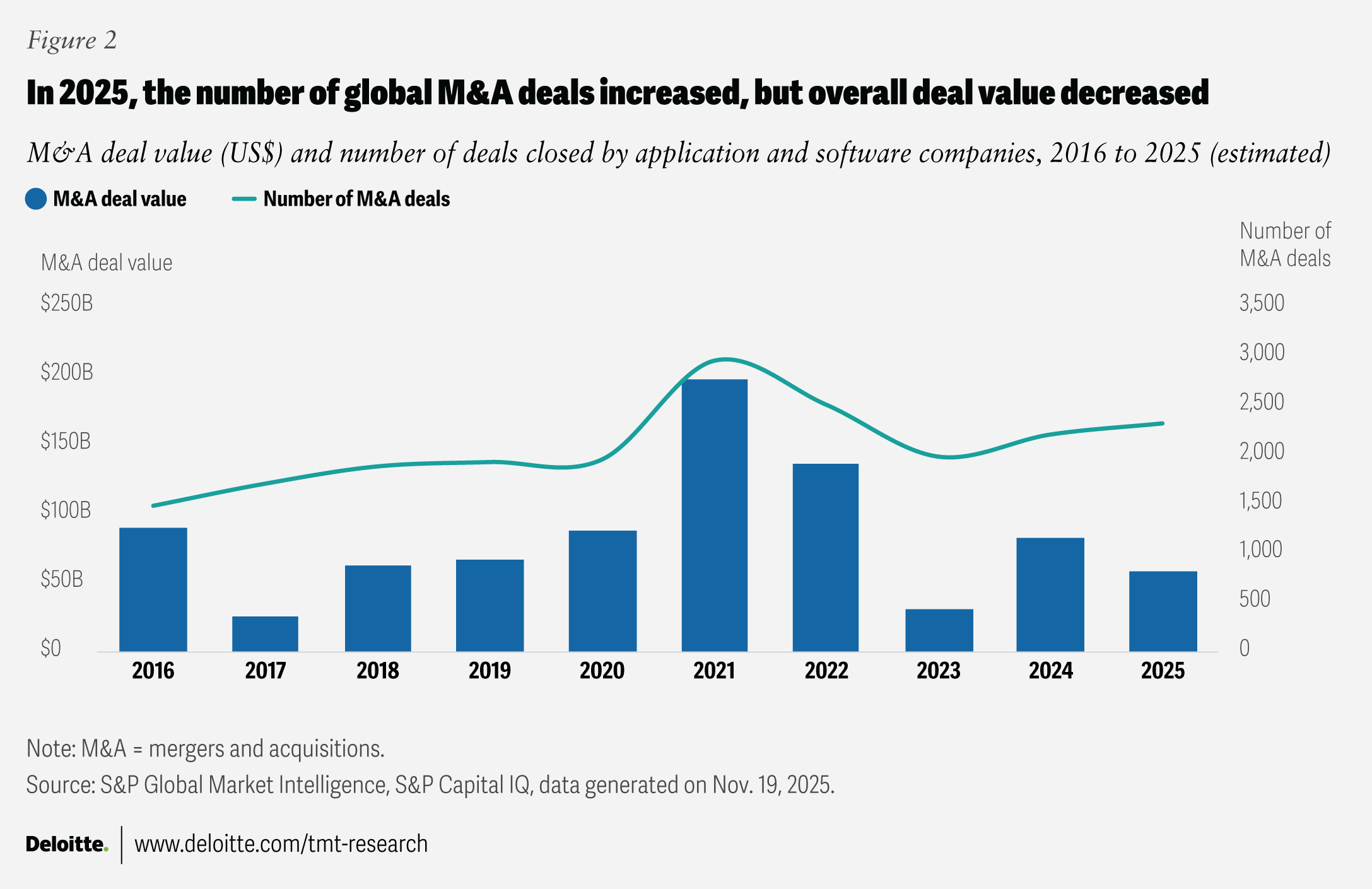
This is the most crucial shift in the entire projection. Enterprises quit on build. They're going all-in on buy. Enterprises purchase many of their generative AI capabilities through suppliers. You do not need a customized AI option. You don't need to provide POCs. You require to deliver AI functions into your existing product that develop massive ROI.
Even Figma still isn't charging for much of its new AI functionality. It's not capturing any of the IT budget plan development that method. Despite being in the trough of disillusionment in 2026, GenAI functions are now ubiquitous throughout software currently owned and run by enterprises and these functions cost more cash.
Equipping B2B Teams through Enablement
Everybody understands AI isn't magic. POCs stopped working. Expectations dropped. And yet spending is accelerating. Why? Due to the fact that at this point, NOT having AI functions makes your product feel out-of-date. The cost of software is increasing and both the cost of features and functionality is going up also thanks to GenAI.
Considering that 9% of spending plan development is consumed by rate boosts and most of the rest goes to AI, where's the money actually coming from? 37% of financing leaders have currently stopped briefly some capital costs in 2025, yet AI investments remain a leading concern.
54% of infrastructure and operations leaders stated cost optimization is their top objective for adopting AI, with lack of spending plan mentioned as a leading adoption challenge by 50% of respondents. Companies are cutting low-ROI software to fund AI software.
Here's the tactical opportunity for SaaS operators. The marketplace expects rate increases. CIOs expect an 8.9% expense increase, typically, for IT services and products. They have actually currently allocated for it. Add AI functions and you can validate 15-25% cost increases on top of that base inflation. GenAI features are now ubiquitous throughout software already owned and run by enterprises and these functions cost more cash.

Modern Sales Enablement Tactics to Win More Deals
Now, buyers accept "we added AI functions" as reason for cost increases. In 18-24 months, AI will be so basic that it will not justify exceptional rates any longer. Ship AI includes into your core product that are crucial adequate to monetize Announce cost boosts of 12-20% tied to the AI capabilities Position the increase as "AI-enhanced performance" not "cost boost" Show some expense optimization or effectiveness gains if possible Companies that execute this in the next 6 months will capture pricing power.

Latest Posts
Designing AI Ranking Frameworks for 2026
How to Modernize Web Stacks in 2026
Utilizing Omnichannel Growth Automation for Enterprise Scalability